Automatic state & network compliance
Surcharging is blocked or capped automatically based on the card type and the patient's billing state, to help protect you from a compliance misstep.
Surcharging is built into FlexPayments, so every eligible credit card payment automatically returns your processing cost back to your practice. Debit, ACH, and cash stay fee-free for patients who choose them.

WHAT IT DOES
Your practice pays a blended processing rate — around 2.9% — on every credit card transaction. Multiply that across a year of card payments, and it's real margin walking out the door, one swipe at a time. Most practices simply absorb it, because until now there hasn't been an easy way not to.
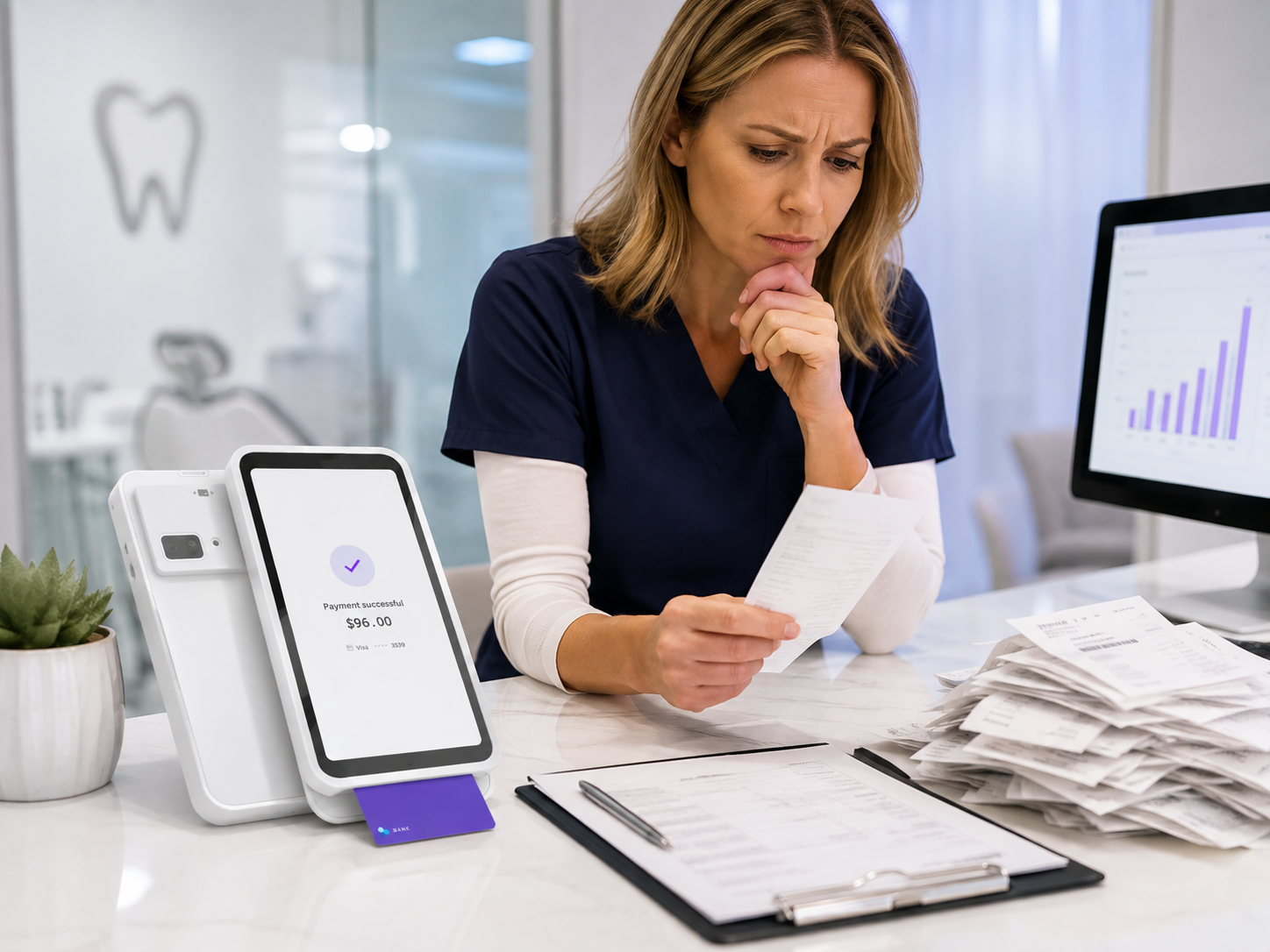
Surcharging changes that. When a patient chooses to pay by credit card, FlexPayments automatically adds a clearly disclosed surcharge — up to 3% — to cover your cost of acceptance. Patients who pay by debit card, ACH, or cash never see an extra fee. The surcharge is calculated, disclosed, and applied in real time, whether the payment happens at your front desk or online.
The result: on a typical card transaction, the surcharge covers your processing cost, bringing your net cost on that transaction down to effectively $0. There's no new vendor to set up, no separate login, and no developer needed — surcharging lives inside the FlexPayments checkout you already use, and every state and card network rule is enforced automatically.
HOW IT WORKS
Set your rate
Choose a surcharge rate up to the 3% card network maximum. FlexPayments automatically applies any lower state cap — for example, 2% in Oklahoma — so you don’t have to track the rules yourself.
Patients choose how to pay
At checkout, patients who pay by credit card see the surcharge calculated and disclosed before they confirm. Patients who pay by debit, ACH, or cash — or who are billed in a state where surcharging isn't allowed — never see a surcharge added.
Everything settles automatically
The surcharge posts to your existing payout schedule, itemizes on the receipt and invoice, and is refunded proportionally if you refund the transaction — no extra reconciliation step, no manual math.
What's Inside Surcharging
Automatic state & network compliance
Surcharging is blocked or capped automatically based on the card type and the patient's billing state, to help protect you from a compliance misstep.
Real-time checkout disclosure
The surcharge is shown to patients before they authorize payment and itemized on every receipt, whether the transaction happens online, in-office, or by phone.
Built-in migration templates
60/30/3-day customer notice emails and an in-office signage template help you introduce surcharging to existing patients without surprising anyone.
WHY FLEX
Flex doesn't connect to Open Dental — it works alongside it. Every action syncs automatically. Nothing to export, import, or manually update.
Flex was founded by a practicing dentist who ran her own Open Dental practice. Every feature was built to solve a real problem she lived.
~1 hour install. 2-hour complimentary team training. No downtime, no data migration. From demo to live without disrupting your practice.
Authorized
Integration Vendor

Surcharging is built into FlexPayments and recovers up to 3% of every eligible credit card transaction automatically — disclosed at checkout in every state where it's permitted, and settled on your existing payout schedule.
Typically responds within 1 business day · No credit card required
FREQUENTLY ASKED QUESTIONS
A surcharge is an additional fee added only when a patient chooses to pay by credit card. It lets your practice recover the cost of processing that payment, while debit, ACH, and cash stay fee-free.
Up to 3% in the United States, capped lower in a few states (Oklahoma is capped at 2%, for example). You set your rate up to the network maximum, and FlexPayments applies any lower state cap automatically. The exact amount is always shown to the patient before they confirm payment.
No. Card network rules prohibit surcharging debit cards, including prepaid debit, in every state. Surcharging also doesn't apply to existing recurring payments already on file — it can only apply to new recurring payments set up going forward, since the fee must be disclosed at the point of sale.
FlexPayments checks the patient's billing address automatically. In states where surcharging is banned (Connecticut, Massachusetts, Maine, Puerto Rico, and New York), no surcharge is applied — the patient is simply charged the original amount.
The surcharge is refunded proportionally along with the original payment, whether the refund is full or partial. There's nothing extra to configure.